
Mock Tests for Stenographer Exams: How to Take Them and Learn from Them
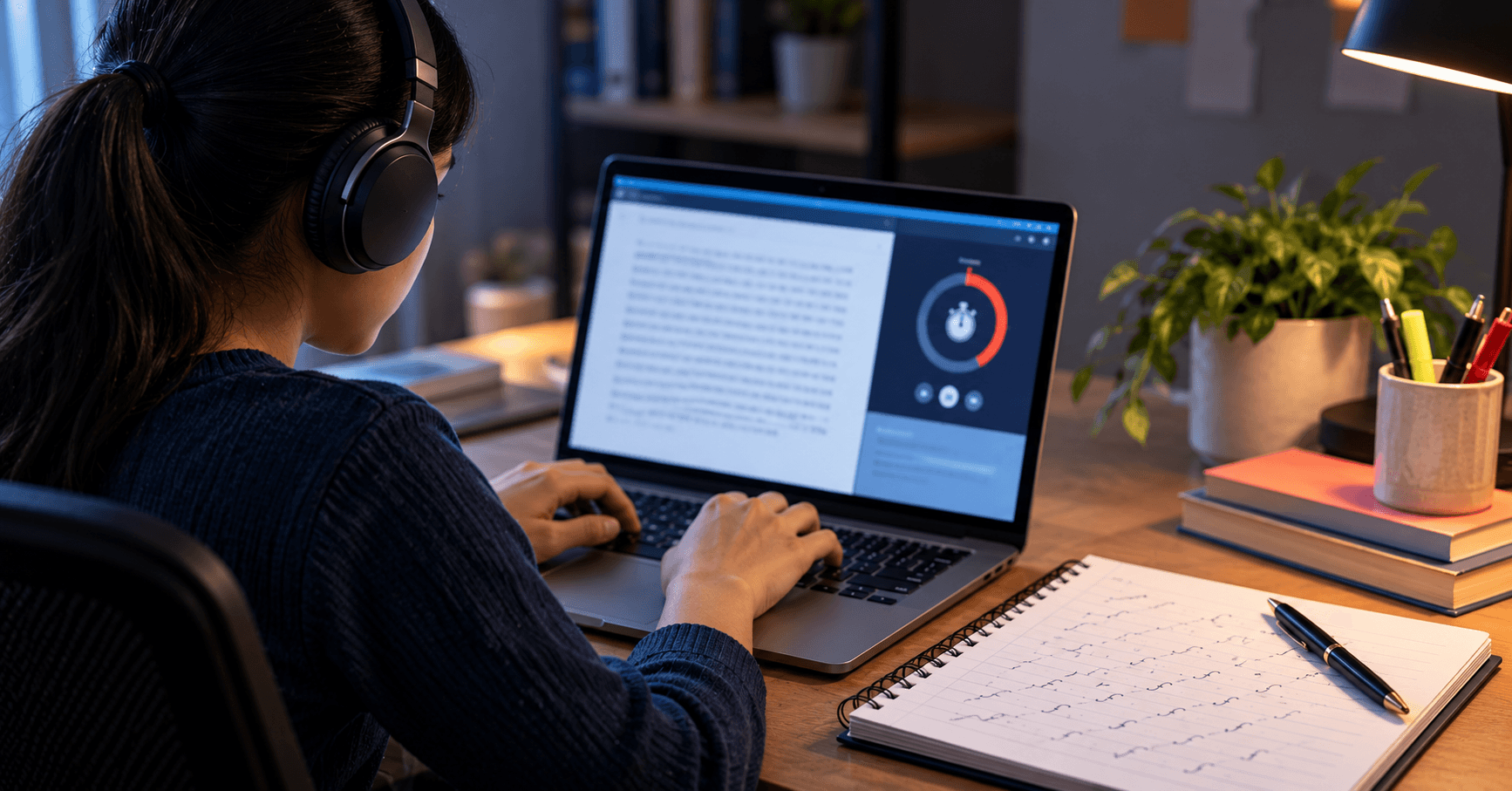
A stenographer mock test is most useful when you take it exactly like the real exam: timed, with no pauses and no help. Afterwards, the analysis matters more than the score, because it shows what to fix before the next one.
Key takeaways
- Take mocks in full exam conditions or the score will mislead you.
- Analyse the result before you start the next mock.
- Take one mock a week at first, then more as the exam nears.
- Use dictation practice to fix what the mock reveals.
Why mock tests matter
Practice tells you what you can do when relaxed. Mock tests show what you can do under time pressure, which is what the exam measures. They also build stamina and reduce exam-day nerves.
How to take a mock properly
- Use a laptop or desktop with a physical keyboard and headphones.
- Sit somewhere quiet and let nothing interrupt you.
- Do not pause or restart. The audio plays once, like the real test.
- Submit when the time ends, even if you are not finished.
The test series on StenoKendra is built this way: the timer is controlled by the server, the audio plays automatically and your result arrives instantly.
How to analyse your result
- Note your accuracy and mistakes before checking anything else.
- Sort the mistakes by type: wrong words, omissions, spelling.
- Find patterns. Do errors cluster at the end, or at faster parts?
- Write down the top three fixes for the week.
- Practice those areas with dictations before the next mock.
How often should you take a mock?
| Stage | Suggested frequency |
|---|---|
| Early preparation | One per week |
| Two months before the exam | Two per week |
| Final month | Three or more per week, with review days between |
Track your trend
One score means little. Compare your last five and look at the trend. Your My Results page lists every attempt so you can see real progress.
What to do the day before a mock
Do light practice only, sleep well and prepare your setup: headphones tested, keyboard ready and distractions off. Treat it as seriously as the real exam, because the habits you build now will carry over to the actual day.
A mock test review template
| Question | Your answer |
|---|---|
| What was my accuracy and speed? | |
| Which mistake type was most common? | |
| Where in the dictation did errors cluster? | |
| What will I change this week? |
Fill this in after every mock. Over time the answers show a clear picture of your progress and what is holding you back.
Dealing with a bad mock
Everyone has a poor mock sometimes. Check whether the cause was tiredness, a hard voice, or a real gap. If it was a one-off, move on. If it repeats, it is a real weakness, and that is exactly what mocks are meant to reveal. Fix it with focused practice, then test again.
Frequently asked questions
How many mock tests should I take before the exam?
There is no fixed number. A good target is to take enough that the exam format feels routine, with a review after each.
What if my mock score is low?
Treat it as information. Analyse the mistakes and practice those areas, then take another mock.
Should I take mocks at the same time as the real exam?
If possible, yes. It helps your body and mind adjust to the schedule.
Are free mocks enough?
Free mocks are a good start. Add more as needed to cover different voices and passages.
Do I need to be logged in to take a mock?
Yes, so your timing, attempt and result can be saved to your account.