
How to Improve Steno Accuracy: 10 Habits That Cut Transcription Errors
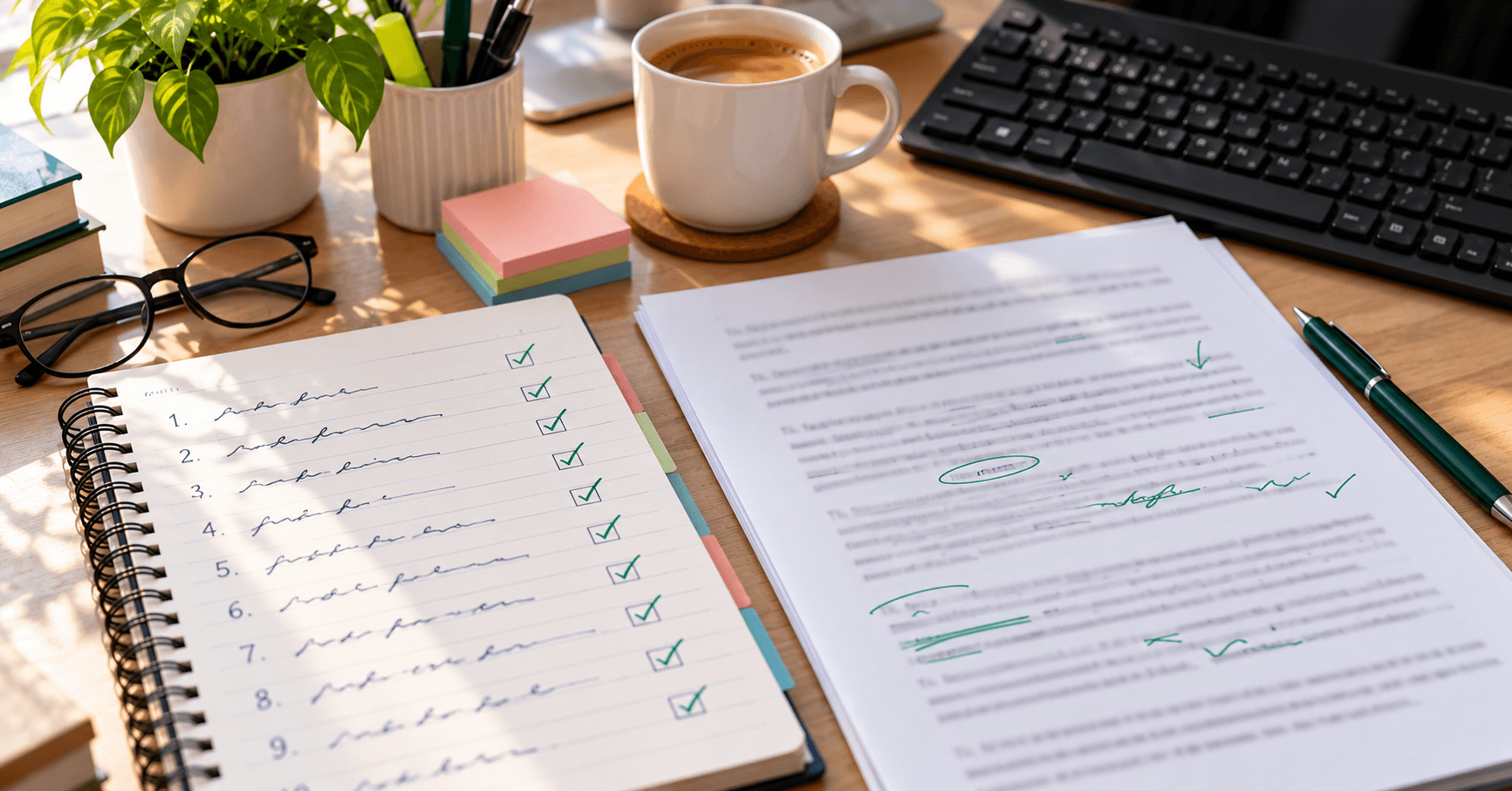
You improve steno accuracy by reviewing every mistake, practicing at a speed you can control, building your vocabulary and proofreading your transcript before you finish. The ten habits below are small, but practiced daily they cut errors quickly.
Key takeaways
- Accuracy comes from habits, not talent.
- Review is more valuable than extra volume.
- Fix recurring mistakes one type at a time.
- Practice the way you will be tested.
The 10 habits
- Review every attempt. Read each mistake and write down why it happened.
- Practice at a controllable speed. Raise speed only when accuracy is stable.
- Keep a mistake notebook. Track repeated errors and revisit them weekly.
- Build vocabulary daily. Use the word library for ten minutes a day.
- Write clear outlines. Neat notes are easier to transcribe.
- Transcribe in a fixed order. Read a few words ahead so you type with confidence.
- Proofread your transcript. Use any spare minutes to scan for slips.
- Mind punctuation and capitalization. These small details add up.
- Repeat weak passages. Redo the ones you scored lowest on.
- Practice in exam conditions. Use headphones, a keyboard and a timer, with no pauses.
Why accuracy matters more than raw speed
Exams set an error limit. A fast writer who exceeds it can still fail, while a steady writer within it passes. Treat accuracy as your first goal and speed as the second.
Use data to improve
On StenoKendra, your result page highlights each mistake, and your history shows which types you repeat. Check it weekly and choose one error type to attack. Create a free account to start tracking.
How to run a good review session
A review session should take about as long as the dictation itself. First, read the highlighted mistakes without judgment. Second, sort them by type. Third, for each mistake, ask one question: could I have avoided this with better listening, a clearer outline, a better vocabulary or more careful typing? Write the answer next to it. After a week you will have a clear map of where your errors come from.
A weekly accuracy checklist
- Did I review every attempt this week?
- Did I update my mistake notebook?
- Did I revise my vocabulary list three times?
- Did I repeat at least two weak passages?
- Did I take one timed test with no pauses?
Mental habits that protect accuracy
Accuracy suffers when you panic. If you lose a word, let it go instead of chasing it, since chasing it usually costs two more. Stay one phrase behind the speaker and let your notes carry you. Calm, steady work beats frantic effort in every part of the test.
Frequently asked questions
What is the fastest way to improve steno accuracy?
Review every mistake after each attempt and practice the weak areas. This beats simply doing more passages.
Why do I make more mistakes at higher speeds?
Because there is less time to recall outlines and check words. Build speed in small steps to prevent it.
Does proofreading really help?
Yes. Many errors are small typing slips that a quick scan catches.
How can I improve my spelling for the test?
Keep a list of misspelled words, revise it daily and use the word library.
Should I focus on accuracy or speed?
Both matter, but start with accuracy because it makes your speed count.